Dairy Training makes all the difference
The best advice up-and-coming Southland dairy farmer Emma Blom ever got was to treat the years from 18 to 25 as an apprenticeship – having the rest of her life to make money.
That advice, from the Bloms’ family accountant, Pita Alexander, is something Emma, now 23 years old, seems to be living to a tee.
Emma is working full steam, not only on her family’s northern Southland farm in Balfour, but also to make as much as she can of those ‘apprenticeship’ years.
She was the runner-up Trainee of the Year at the 2025 National NZ Dairy Industry Awards and recently completed Dairy Training’s Emerging Leadership course.
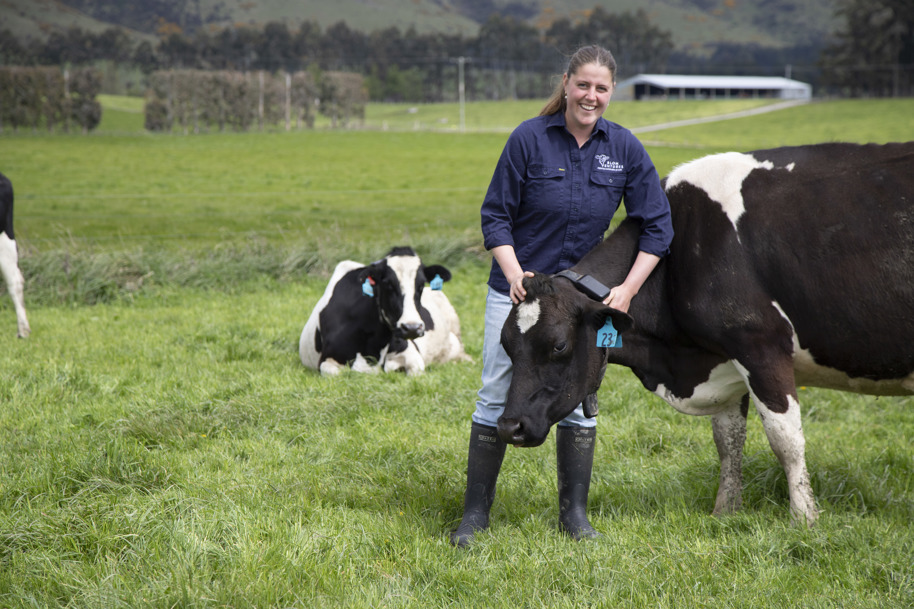
Emma says she was prompted to take part by the realisation that she needed to build specific skills – and by the encouragement of her brother Nick, who had also completed the Emerging Leadership course.
“To grow, you need help from people,” Emma says.
“To get help from people, you need to be good with people. I noticed that I lack some leadership skills.
“Dairy Training’s Emerging Leadership course is a real hands-on, specific course for dairy farmers to improve those skills.”
She found the personality and leadership profiling in the course especially beneficial as it helped her determine her leadership style.
“It showed me my natural leadership style — the one I tend to fall back on — but also gave examples of when I might need to use a different style and what I could work on,” she says.
As a natural leader, Emma takes great pleasure in sharing her knowledge and seeing others succeed. The peer-to-peer learning aspect of the course was also particularly appealing, and she found that the people she took the course with were valuable resources for growth.
Classes are spread out, and she found having weeks between classes allowed her to apply her learning on-farm. She would often ask fellow course participants how they would approach a problem she had faced.
She also values her wider network, seeking ideas for further learning and training opportunities from other farmers and rural professionals, as well as aspirations and advice.
She likes connecting with others and hearing their vision for the sector.
“I get so much energy from it”.
Emma says her family farm values – “do what's right, make it happen, push the boundaries and team effort” – were reinforced by her learnings from the course. The structured nature of the course made her realise how valuable it is to have time set aside specifically for learning, and she learnt the importance of setting time aside to plan, too.
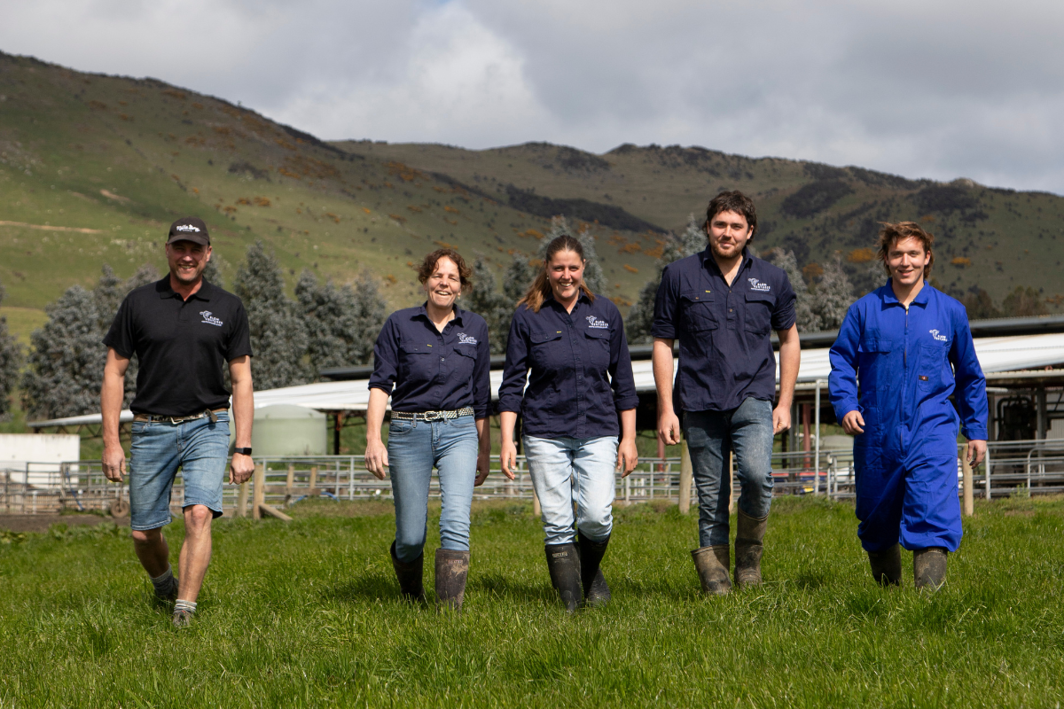
Originally hailing from the Netherlands, Emma’s parents, Helen and Art Blom, migrated to New Zealand in 1996 for an overseas internship. They planned to spend 12 months in NZ before returning to take over the family farm back home, but they fell in love with New Zealand and stayed.
Emma attended Lincoln University and gained a bachelor’s degree in environment and society. She took part in an exchange programme while at university, spending a semester at Wageningen University in the Netherlands.
After graduating, Emma returned to her family farming business, Blom Ventures, in northern Southland. She completed an artificial insemination (AI) course with CRV and now does an AI run each mating season.

There’s two layers to farming – a practical side and a financial side. To be successful, you really need to understand both, inside and out.
There are four farms in Blom Ventures – McDonald Road, where Emma is currently managing; Progressive Dairies, where she also rears calves; White Gold; and Blom Family Farms, where Nick is contract milking. There are 2000 cows across the four farms and they all operate a System 3.
The family focus is on growing and harvesting as much grass as possible and having a good workplace to maintain their team in the long term.
At McDonald Road, the milking herd consists of late calvers and carry-over cows that are winter milked on one of their other farms. In April each year, cows are sorted across the farms and settled into the herds they will calve in based on predicted calving dates.
They are wintered either in a barn or on crops.
Calving starts on all of the farms except McDonald Road in early August, and finishes mid-September. McDonald Road starts later, once those earlier farms are finished. The rolling calving set-up allows them to retain cows, condense calving and maximise the number of days in milk.
The system also streamlines the overall Blom farming system for better time, skill and resource utilisation.
As Emma puts it, dairy farmers are essentially grass farmers – their job is to turn grass into milk as efficiently as possible.
All of the youngstock are grazed at McDonald Road. There are hilly paddocks that aren’t suitable for the milking herd so are well suited to the youngstock. They have a strong focus on youngstock health and growth rates, and having them at home allows them to manage them in a similar way to a milking herd, with daily shifts. They’re weighed monthly.
In the short term, Emma plans to boost production on McDonald Road, complete another season of AI with a target of 5000 inseminations, and visit farms and family in the Netherlands this winter with her partner, Jake Van Adrichem, who is also Dutch and a local contractor.
Eventually, she wants to be more financially invested in the farm and in farming in general. She is already exploring governance and says that having governance roles as a future goal makes her “think bigger-picture than just boots-on-the-ground farming”.
She hopes to own her own farm one day and perhaps have a role in national governance, and believes Dairy Training courses will be instrumental in achieving her goals. She’s hoping to complete Feed for Profit in autumn and would also like to tackle Business by the Numbers soon, to understand “what the figures are behind the practical”.
“There’s two layers to farming – a practical side and a financial side. To be successful, you really need to understand both, inside and out.”
We use cookies to ensure that we give you the best experience on our website. By using our website you agree to our privacy policy and cookie usage.